Thursday, 9 February 2012

Pitfalls and Progress


Having stated my intention to adopt better working habits in my last post, I am writing to update you on progress
.
In spite of a new year that has so far involved the collapse and rebuild of my kitchen ceiling (owing to a slow leak that we were unaware of when we moved in last August), an unexpected lodger, illness and snow, writing has been going well. I have, by and large, managed to recoup the time lost by all of the aforementioned by avoiding social networking sites (at least during the day) and getting up earlier.

So far so good! I have also taken on a number of exciting new projects recently. The first is setting up a writing group for my local WI (WoSWI) which I hope will eventually help get me back on track with my novel. I have been a member of a reading group for some years but have missed the support and encouragement that being a part of a writing circle can bring and I am really looking forward to it.
I'll let you know how it goes.

On the work front, I have been commissioned to compile part of a series of quiz eBooks about popular musical artists and the first The McFly Quiz Book is now available from Amazon kindle store.

I have also penned a couple of short stories which, ever the optimist; I might just enter into a competition or possibly even publish on my blog. Now there’s a thought …x

Monday, 30 January 2012

A question of habit


I have heard it said that many things in life are a result of habit; your bank balance and waistline to name just two. As a writer, I should also add finishing that novel or even, keeping up with a blog.

Anyone who happened upon this page recently will, no doubt, be struck by the lack of up-to-date content. I would like to say that my attention has been directed at a worthier cause but in truth, much like exercising over Christmas, I have simply lost the habit.

Happily, it being nearly February, I have managed to completely bypass that time of the year when we make all those New Year’s resolutions that we have no more hope of sticking to than we did this time last year. So I haven’t vowed to drop a dress size, take up yoga or write 2000 words a day as I have done in previous years. I am, however, trying to adopt better writing habits (and yes, both my waistline and bank balance could also both benefit from this approach!).

These include getting to my desk earlier in the morning, not being distracted by Twitter, email and Facebook and making better use of my evenings (ie no more reality TV!).

It makes sense that small steps will eventually lead you to your goal, or at least get you a lot closer. Regular savings lead to better financial health, small deposits in the emotional bank lead to a happier home life and yes, all those pages will eventually add up to a book.

Or, at least, that’s the theory!

I am still juggling all those many other things that eat up my time and take me away from my desk, not to mention all the various projects I have on the go when I get there (more of that another time), but by developing better working habits, I am optimistic that you won’t have to wait another two months for a new post. 

Thank you for sticking with me.

Sunday, 20 November 2011

Ending it well


A lot of novels, a bit like some relationships, don’t end well.

I have read many good books that fail to deliver in the final chapters and pages. In some cases, it has almost felt like the author has run out of ideas and it is a great disappointment when a page turning novel can’t sustain the pace until the end.

I always start with the ending. I never start to write until I know where I am heading, especially with fiction. My problem is in reaching that final destination and not what to do when I get there.

I can quote some great openings to novels but not so many endings. A good novel should have a satisfying conclusion and (for me) that doesn’t just mean a happy ending. A ‘good’ ending is one that isn’t too predictable or contrived but still ties up all those loose ends and sub plots with maybe one or two surprises that you didn’t see coming.


Easier said than done? Most of the time, it seems, yes! We have all read books where it was obvious from page one ‘whodunit’ or where the story has just fizzled out. Even worse, is when you stick with a book because you are convinced there has to be more to it but there is no redeeming ‘big finish’.

At a writing class I attended we were told the importance of grabbing the reader’s attention from the outset, to start at the point of conflict and make the beginning as good as it can possibly be. I would add, make sure that you end it well, otherwise your readership is unlikely to rush to read your next story or novel.


If you always end it well, the only disappointment your readers feel is that your book has ended and not that it ended badly.


Monday, 31 October 2011

Write for love, not money


The best advice I was given when I started writing was to do it because you enjoy it and not with the hope of making your fortune.

Anyone who puts pen to paper (or fingers to keyboard) in the belief that writing will make them instantly rich is deluded – it won’t. We have all heard of incidences where a ‘first time’ author has been offered a six figure sum for their debut novel but dig a little deeper and you will probably discover that the writer has been at it for years with several failed attempts and false starts behind them. Those who succeed have tenacity and determination. It can take a very long time to get published and it is those who stick with it who will eventually succeed, so don’t give up your day job at the first flash of inspiration.

If you love writing and do it because you enjoy it, it will show. If you are bored with your characters and plot, then your readers will be too!

In my last post, I said that all the magic happens at the editing stage and this is true but the hard part is sitting down at your desk and committing the words to paper (or screen). This is why National Novel Writing Month which kicks off tomorrow is such a great idea as it focuses on quantity rather than quality and forces you to churn out words on daily basis. The aim is to have written a 50,000 word novel by the end of the month (November) – the end result might not win any prizes for literature but you will have laid the foundations for your book and with a bit (or quite a lot) of editing, who knows where it might lead?

Nanowrimo is an excellent example of writing for the love of it. For the sheer joy of creating something from scratch and having fun with words. For first time writers this is an excellent starting point.

Sadly, I will not be participating this year as part of the rules for entry are that you start from scratch and I want to press on with the book that I am already working on. I have signed up in the past and managed to write the best part of a truly awful romance that I would never dare submit to M&B as it stands, but I thoroughly enjoyed the freedom of writing without boundaries. I tend to edit as I go along and having permission to write unchecked was extremely liberating.

So if you haven’t signed up yet, take a look at the website (www.nanowrimo.org) and have a go.

The very best of luck to everyone who is taking part in Nanowrimo and everyone writing (whatever, wherever) throughout November.  

Monday, 3 October 2011

It's all about editing

This morning when I was reading through what I had last written in my novel, I found myself writing ‘crap’ in the margin next to one particular paragraph.

This may sound a little harsh but the passage was all wrong; forced and clichéd, and had the result of making me laugh at what was supposed to be a serious moment in the book. If I found the diabolical prose hilarious, then I know full well that a reader would too.

This is the point of editing. When we are in the flow and the storyline is progressing well, we lose control of the fine detail, as the words pour out onto the page. This is as it should be, but the real magic only happens when we start to edit. 

During my time as a magazine editor, I always told writers that the best way to check their work was to print out the article, put it in a drawer and come back and read it later, making corrections with a red pen. You always miss your own mistakes and it is far easier to spot things on a printed page than on a computer screen (I’m sure I don’t need to tell anyone reading this that they should never rely on the spellchecker).


Some authors churn out an entire book and then go back and start the process of editing. I am not this kind of writer. I have to edit as I go along and each time I work on my novel (or anything else) I begin by reading through and tidying up what I have written the previous day. That doesn’t mean that I won’t need to revisit the whole thing again at the end, but I prefer to keep improving the text as I go along and it is helps my writing to evolve and grow.

I once heard it said that ‘good novels are not written, they are rewritten’ and I think that there is an element of truth in this, although there has to come a point when you are satisfied, when you have done the best job that you can and it is time to send your manuscript out into the world. 

I also know perfectly competent writers whose novels are yet to see the light of day, who perfect and rewrite to such an extent that they will never be happy with the finished book. 

The ideal lies somewhere in the middle.

As a copy editor, numerous people’s books have passed through my hands and they have varied in quality.  Some are as near perfect as the author can make them, others are closer to a first draft and need extensive rewriting to make them anywhere near publishable.

Naturally, I find it much more difficult to be objective about my own work and would never dream of writing ‘crap’ in the margin of one of my clients (even if on occasion I might have thought it!).  

One thing I am certain of is that there can be no book without some form of editing. Now, having struck a red line through that awful paragraph, all I have to do is rewrite it!

Tuesday, 20 September 2011

A little inspiration


Writing is an uncertain business. Those who engage in the craft spend many solitary hours wrapped up in a world of their own creation, never knowing whether their book will ever be read by anyone other than themselves. So it is always encouraging to hear about authors who have been successful.

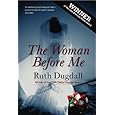
I recently attended a talk by Ruth Dugdall, author or The Woman Before Me, who reinforced the view that although getting into print is difficult; it can be done if you persevere.

Ruth came to writing accidentally (it is, by her own admission, a long story) but she has stuck with it even though it took a while for The Woman Before Me to make it into print. The book but was not published until August 2010 despite winning The Debut Dagger in 2004.

I read Ruth’s novel and couldn’t put it down. There were little imperfections but nothing that detracted from a good story told well and, in some ways, this added credibility to the flaws in the characters themselves. As founder member of a book group, I am always on the look out for a good read and I would highly recommend The Woman Before Me to anyone who enjoys a psychological thriller. 

Ruth is an engaging and inspirational speaker and I enjoyed hearing about her journey into writing. It certainly gave me motivation to get on with my own novel which is growing more slowly than I would like, in spite of this blog.

I have been to several similar talks and, listening to the authors detailing the road to publication, the one thing that they all have in common is perseverance. There is no quick fix and getting into print is hard work, but one thing is certain, if you never start the journey, you will never reach your goal.

The Woman Before Me by Ruth Dugdall is published by Legend press